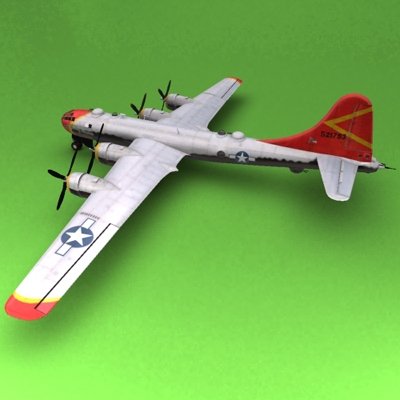
Boeing’s B-29 Superfortress was the most sophisticated, propeller-driven, bomber to fly during World War II, and the first bomber to house its crew in pressurized compartments. Boeing installed very advanced armament, propulsion, and avionics systems into the Superfortress. During the war in the Pacific Theater, the B-29 delivered the first nuclear weapons used in combat. On August 6, 1945, Colonel Paul W. Tibbets, Jr., in command of the Superfortress ‘Enola Gay,’ dropped an atomic bomb on Hiroshima, Japan. Three days later, Major Charles W. Sweeney piloted another B-29 named ‘Bockscar’ and dropped a second atomic bomb on Nagasaki, Japan. On August 14, 1945, the Japanese accepted Allied terms for unconditional surrender. After the war, B-29s were adapted for several functions, including in-flight refueling, anti-submarine patrol, weather reconnaissance and rescue duty. The B-29 saw military service again in Korea between 1950 and 1953, battling new adversaries: jet fighters and electronic weapons. The last B-29 in squadron use retired from service in September 1960. The texture is for OLE MISS
Tag: enola
-
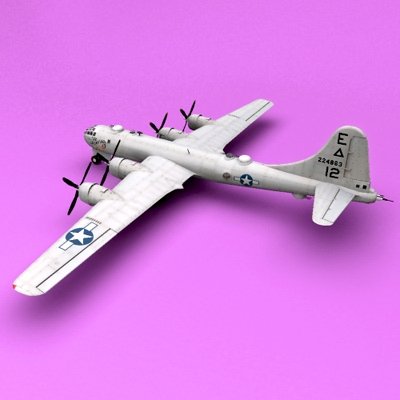
B-29 3D Model
Boeing’s B-29 Superfortress was the most sophisticated, propeller-driven, bomber to fly during World War II, and the first bomber to house its crew in pressurized compartments. Boeing installed very advanced armament, propulsion, and avionics systems into the Superfortress. During the war in the Pacific Theater, the B-29 delivered the first nuclear weapons used in combat. On August 6, 1945, Colonel Paul W. Tibbets, Jr., in command of the Superfortress ‘Enola Gay,’ dropped an atomic bomb on Hiroshima, Japan. Three days later, Major Charles W. Sweeney piloted another B-29 named ‘Bockscar’ and dropped a second atomic bomb on Nagasaki, Japan. On August 14, 1945, the Japanese accepted Allied terms for unconditional surrender. After the war, B-29s were adapted for several functions, including in-flight refueling, anti-submarine patrol, weather reconnaissance and rescue duty. The B-29 saw military service again in Korea between 1950 and 1953, battling new adversaries: jet fighters and electronic weapons. The last B-29 in squadron use retired from service in September 1960.
-
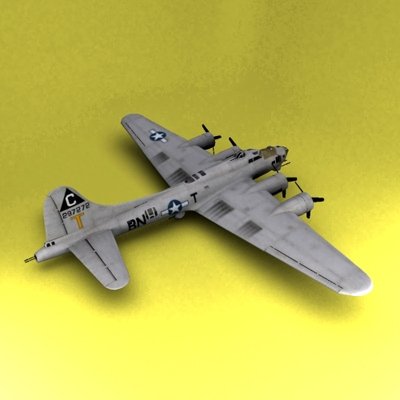
B-17 3D Model
The B-17 was a low-wing monoplane that combined aerodynamic features of the XB-15 giant bomber, still in the design stage, and the Model 247 transport. The B-17 was the first Boeing military aircraft with a flight deck instead of an open cockpit and was armed with bombs and five .30-caliber machine guns mounted in clear ‘blisters.’ The B-17E, the first mass-produced model Flying Fortress, carried nine machine guns and a 4,000-pound bomb load. It was several tons heavier than the prototypes and bristled with armament. It was the first Boeing airplane with the distinctive — and enormous — tail for improved control and stability during high-altitude bombing. Each version was more heavily armed. In the Pacific, the planes earned a deadly reputation with the Japanese, who dubbed them ‘four-engine fighters.’ The Fortresses were also legendary for their ability to stay in the air after taking brutal poundings. They sometimes limped back to their bases with large chunks of the fuselage shot off.
-
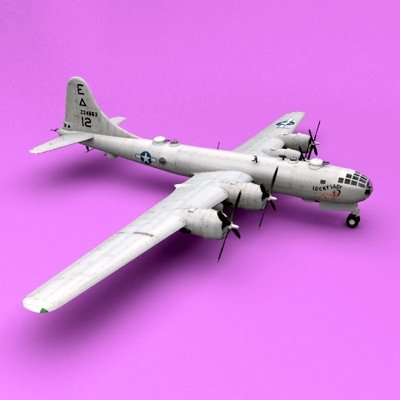
B-29 3D Model
Boeing’s B-29 Superfortress was the most sophisticated, propeller-driven, bomber to fly during World War II, and the first bomber to house its crew in pressurized compartments. Boeing installed very advanced armament, propulsion, and avionics systems into the Superfortress. During the war in the Pacific Theater, the B-29 delivered the first nuclear weapons used in combat. On August 6, 1945, Colonel Paul W. Tibbets, Jr., in command of the Superfortress “Enola Gay,” dropped an atomic bomb on Hiroshima, Japan. Three days later, Major Charles W. Sweeney piloted another B-29 named “Bockscar” and dropped a second atomic bomb on Nagasaki, Japan. On August 14, 1945, the Japanese accepted Allied terms for unconditional surrender. After the war, B-29s were adapted for several functions, including in-flight refueling, anti-submarine patrol, weather reconnaissance and rescue duty. The B-29 saw military service again in Korea between 1950 and 1953, battling new adversaries: jet fighters and electronic weapons. The last B-29 in squadron use retired from service in September 1960.
-
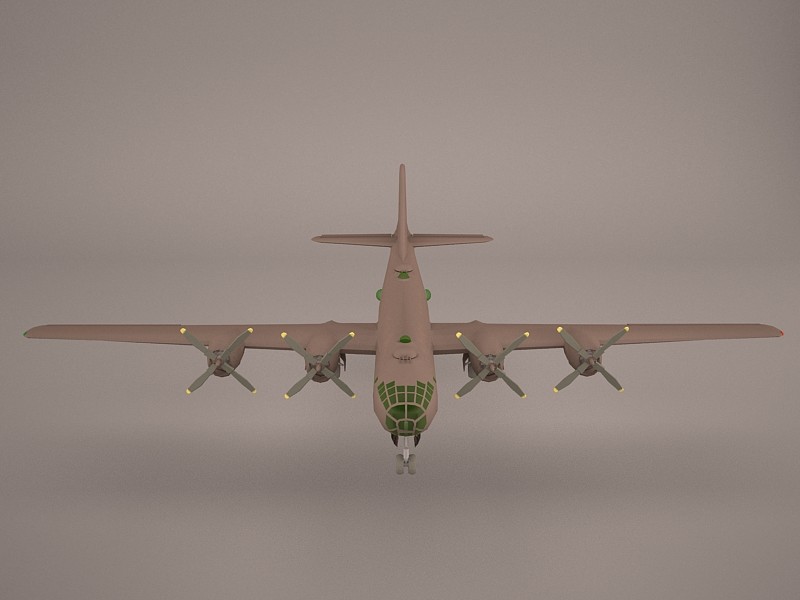
B-29 Superfortress
Aircraft B-29 Superfortress enola gay enolagay B29 Bomber World War II Prop fighter historic bomb propeller