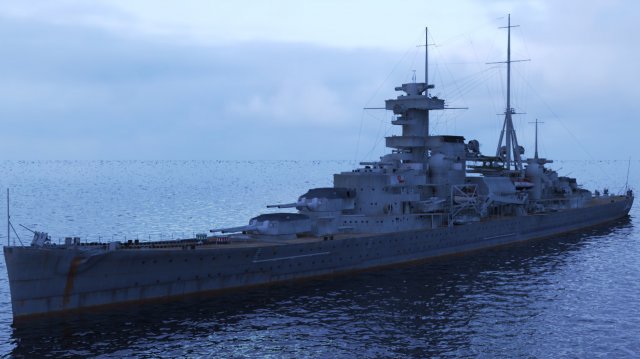
The Admiral Hipper class was a group of five heavy cruisers built by Nazi Germany’s Kriegsmarine beginning in the mid-1930s. The class comprised Admiral Hipper, the lead ship, Blucher, Prinz Eugen, Seydlitz, and Lutzow. Only the first three ships of the class saw action during World War II. Work on Seydlitz stopped when she was approximately 95 percent complete; it was decided to convert her into an aircraft carrier, but this was not completed either. Lutzow was sold incomplete to the Soviet Union in 1940.Textures: from 512×512 to 4096x409Diffuse, Opasity.
Tag: bismarck
-
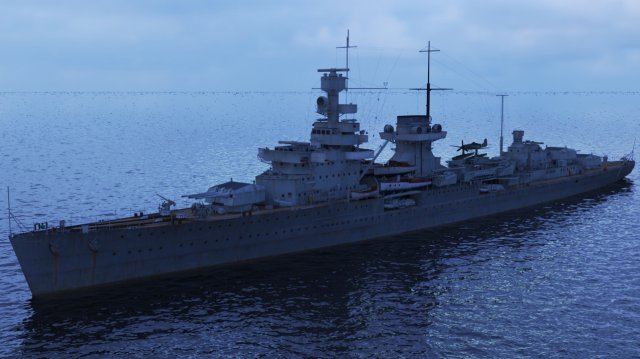
German cruiser Nurnberg with Ta-152 3D Model
Nurnberg was a German light cruiser of the Leipzig class built for the Kriegsmarine. She was named after the city of Nuremberg and had one sister ship, Leipzig. Nurnberg was laid down in 1934, launched in December of that year, and completed in November 1935. She was armed with a main battery of nine 15 cm (5.9 in) guns in three triple turrets and could steam at a speed of 32 knots (59 km/h; 37 mph). Nurnberg was the longest-serving major warship of the Kriegsmarine, and the only one to see active service after the end of World War II, though not in a German navy.Textures: from 512×512 to 4096x409Diffuse, Opasity.
-
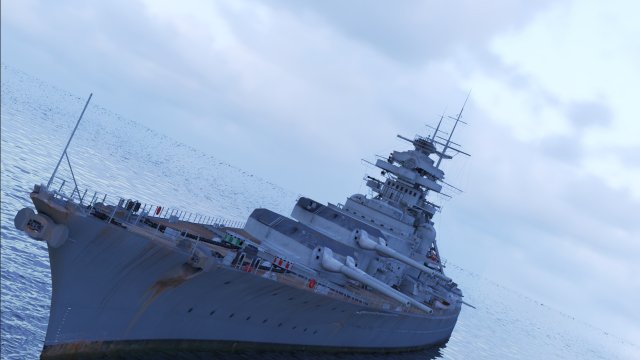
German battleship Bismarck 3D Model
Bismarck was the first of two Bismarck-class battleships built for Nazi Germany’s Kriegsmarine. Named after Chancellor Otto von Bismarck, the ship was laid down at the Blohm & Voss shipyard in Hamburg in July 1936 and launched in February 1939. Work was completed in August 1940, when she was commissioned into the German fleet. Bismarck and her sister ship Tirpitz were the largest battleships ever built by Germany, and two of the largest built by any European power.Textures: from 512×512 to 4096x409Diffuse, Specular, Normal, Opasity.
-
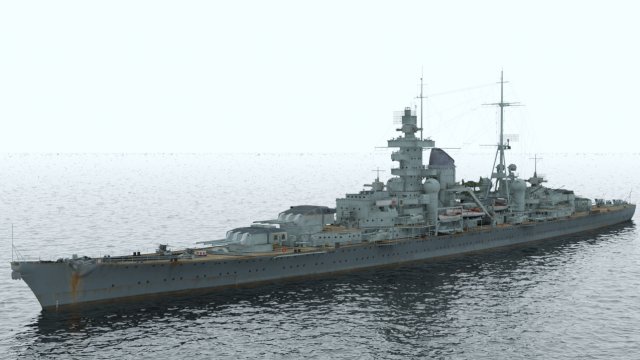
SMS Hindenburg with Ta-152 Ar-196 3D Model
SMS Hindenburg was a battlecruiser of the German Kaiserliche Marine (Imperial Navy), the third ship of the Derfflinger class, built to a slightly modified design. She carried the same battery of eight 30.5 cm (12.0 in) guns, but in improved turrets that allowed them to fire further. The ship was also slightly larger and faster than her two sister ships. She was named in honor of Field Marshal Paul von Hindenburg, the victor of the Battle of Tannenberg and the Battle of the Masurian Lakes, as well as Supreme Commander of the German armies from 1916. The ship was the last capital ship of any type built for the German navy during World War I.Hindenburg was commissioned late in the war and as a result had a brief service career. The ship took part in a handful of short fleet operations as the flagship of the I Scouting Group in 1917–18, though saw no major action. The proposed final sortie of the fleet in the last weeks of the war came to nothing when the crews of the capital ships mutinied. Hindenburg was subsequently interned with the rest of the German battlecruisers at Scapa Flow in November 1918. Rear Admiral Ludwig von Reuter ordered the ships be scuttled on 21 June 1919. Hindenburg was the last of the ships to sink. She was raised in 1930 and broken up for scrap over the following two years.Textures: from 512×512 to 4096x409Diffuse, Opasity.
-
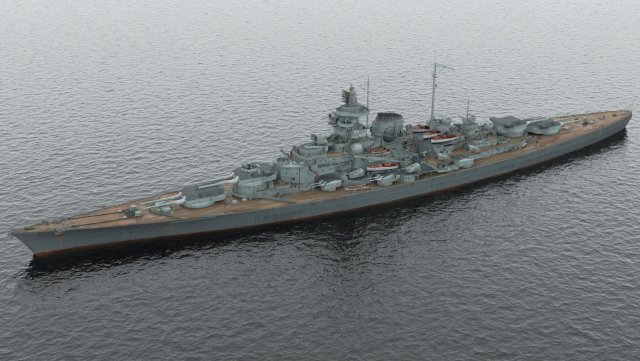
German battleship Tirpitz 3D Model
Tirpitz was the second of two Bismarck-class battleships built for Nazi Germany’s Kriegsmarine during World War II. Named after Grand Admiral Alfred von Tirpitz, the architect of the Kaiserliche Marine, the ship was laid down at the Kriegsmarinewerft Wilhelmshaven in November 1936 and her hull was launched two and a half years later. Work was completed in February 1941, when she was commissioned into the German fleet. Like her sister ship Bismarck, Tirpitz was armed with a main battery of eight 38-centimetre guns in four twin turrets. After a series of wartime modifications she was 2,000 tonnes heavier than Bismarck, making her the heaviest battleship ever built by a European navy.Units scale: meters.Textures: from 256 to 4096Diffuse, Opacity.
-
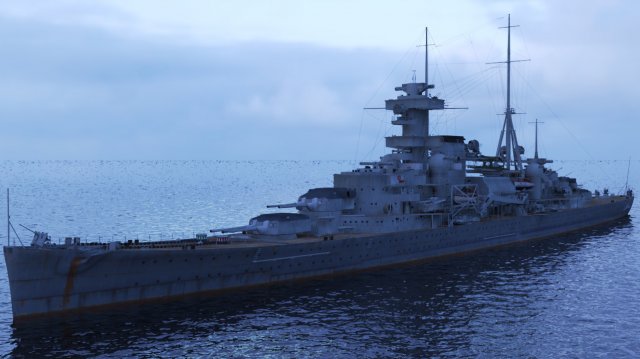
Admiral Hipper-class cruiser with Ta-152 3D Model
The Admiral Hipper class was a group of five heavy cruisers built by Nazi Germany’s Kriegsmarine beginning in the mid-1930s. The class comprised Admiral Hipper, the lead ship, Blucher, Prinz Eugen, Seydlitz, and Lutzow. Only the first three ships of the class saw action during World War II. Work on Seydlitz stopped when she was approximately 95 percent complete; it was decided to convert her into an aircraft carrier, but this was not completed either. Lutzow was sold incomplete to the Soviet Union in 1940.Textures: from 512×512 to 4096x409Diffuse, Opasity.
-
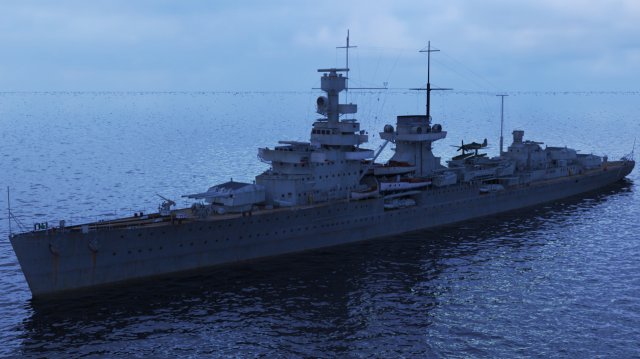
German cruiser Nurnberg with Ta-152 3D Model
Nurnberg was a German light cruiser of the Leipzig class built for the Kriegsmarine. She was named after the city of Nuremberg and had one sister ship, Leipzig. Nurnberg was laid down in 1934, launched in December of that year, and completed in November 1935. She was armed with a main battery of nine 15 cm (5.9 in) guns in three triple turrets and could steam at a speed of 32 knots (59 km/h; 37 mph). Nurnberg was the longest-serving major warship of the Kriegsmarine, and the only one to see active service after the end of World War II, though not in a German navy.Textures: from 512×512 to 4096x409Diffuse, Opasity.
-
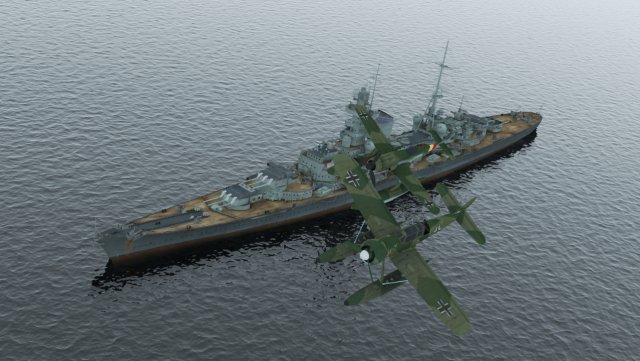
SMS Hindenburg with Ta-152 Ar-196 3D Model
SMS Hindenburg was a battlecruiser of the German Kaiserliche Marine (Imperial Navy), the third ship of the Derfflinger class, built to a slightly modified design. She carried the same battery of eight 30.5 cm (12.0 in) guns, but in improved turrets that allowed them to fire further. The ship was also slightly larger and faster than her two sister ships. She was named in honor of Field Marshal Paul von Hindenburg, the victor of the Battle of Tannenberg and the Battle of the Masurian Lakes, as well as Supreme Commander of the German armies from 1916. The ship was the last capital ship of any type built for the German navy during World War I.Hindenburg was commissioned late in the war and as a result had a brief service career. The ship took part in a handful of short fleet operations as the flagship of the I Scouting Group in 1917–18, though saw no major action. The proposed final sortie of the fleet in the last weeks of the war came to nothing when the crews of the capital ships mutinied. Hindenburg was subsequently interned with the rest of the German battlecruisers at Scapa Flow in November 1918. Rear Admiral Ludwig von Reuter ordered the ships be scuttled on 21 June 1919. Hindenburg was the last of the ships to sink. She was raised in 1930 and broken up for scrap over the following two years.Textures: from 512×512 to 4096x409Diffuse, Opasity.
-
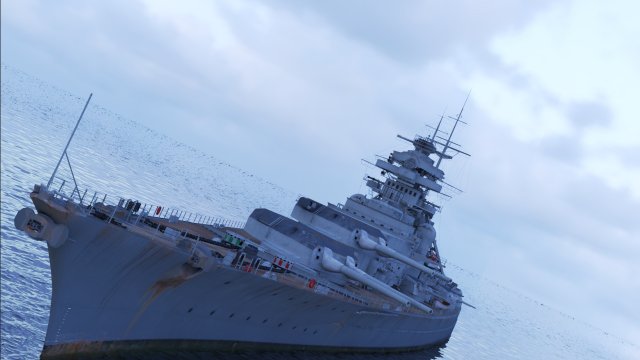
German battleship Bismarck 3D Model
Bismarck was the first of two Bismarck-class battleships built for Nazi Germany’s Kriegsmarine. Named after Chancellor Otto von Bismarck, the ship was laid down at the Blohm & Voss shipyard in Hamburg in July 1936 and launched in February 1939. Work was completed in August 1940, when she was commissioned into the German fleet. Bismarck and her sister ship Tirpitz were the largest battleships ever built by Germany, and two of the largest built by any European power.Textures: from 512×512 to 4096x409Diffuse, Specular, Normal, Opasity.
-
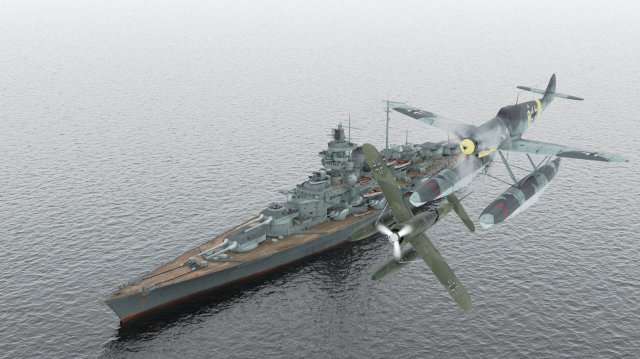
German battleship Tirpitz 3D Model
Tirpitz was the second of two Bismarck-class battleships built for Nazi Germany’s Kriegsmarine during World War II. Named after Grand Admiral Alfred von Tirpitz, the architect of the Kaiserliche Marine, the ship was laid down at the Kriegsmarinewerft Wilhelmshaven in November 1936 and her hull was launched two and a half years later. Work was completed in February 1941, when she was commissioned into the German fleet. Like her sister ship Bismarck, Tirpitz was armed with a main battery of eight 38-centimetre guns in four twin turrets. After a series of wartime modifications she was 2,000 tonnes heavier than Bismarck, making her the heaviest battleship ever built by a European navy.Units scale: meters.Textures: from 256 to 4096Diffuse, Opacity.
-
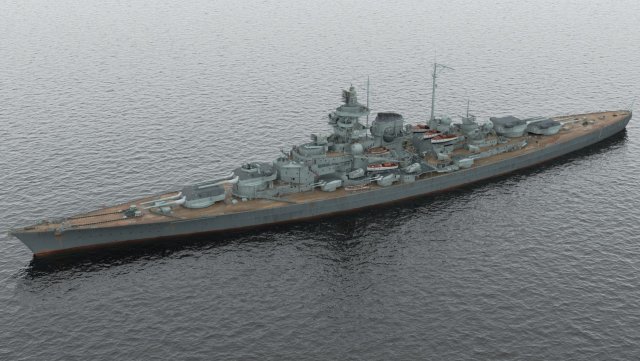
German battleship Tirpitz 3D Model
Tirpitz was the second of two Bismarck-class battleships built for Nazi Germany’s Kriegsmarine during World War II. Named after Grand Admiral Alfred von Tirpitz, the architect of the Kaiserliche Marine, the ship was laid down at the Kriegsmarinewerft Wilhelmshaven in November 1936 and her hull was launched two and a half years later. Work was completed in February 1941, when she was commissioned into the German fleet. Like her sister ship Bismarck, Tirpitz was armed with a main battery of eight 38-centimetre guns in four twin turrets. After a series of wartime modifications she was 2,000 tonnes heavier than Bismarck, making her the heaviest battleship ever built by a European navy.Units scale: meters.Textures: from 256 to 4096Diffuse, Opacity.
-
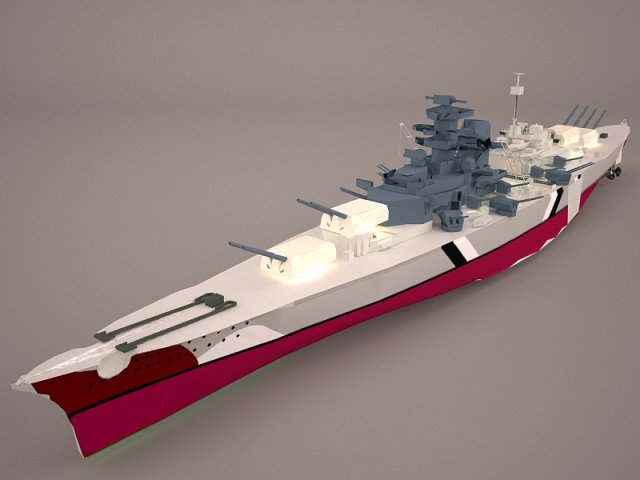
Bismarck class battleship 3D Model
Nazi Bismarck German navy naval battleship battlecruiser water sea boat military army marine world war WW2 II lowpoly
-
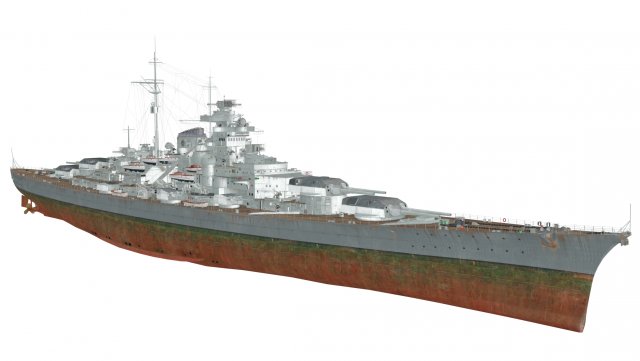
Bismarck Battleship in detal 3D Model
High detailed 3d model of the battle ship Bismarck, project 19393D model low poly for game ready and rendering.Textures: from 512×512 to 4096x409Diffuse, Specular, Normal.
-
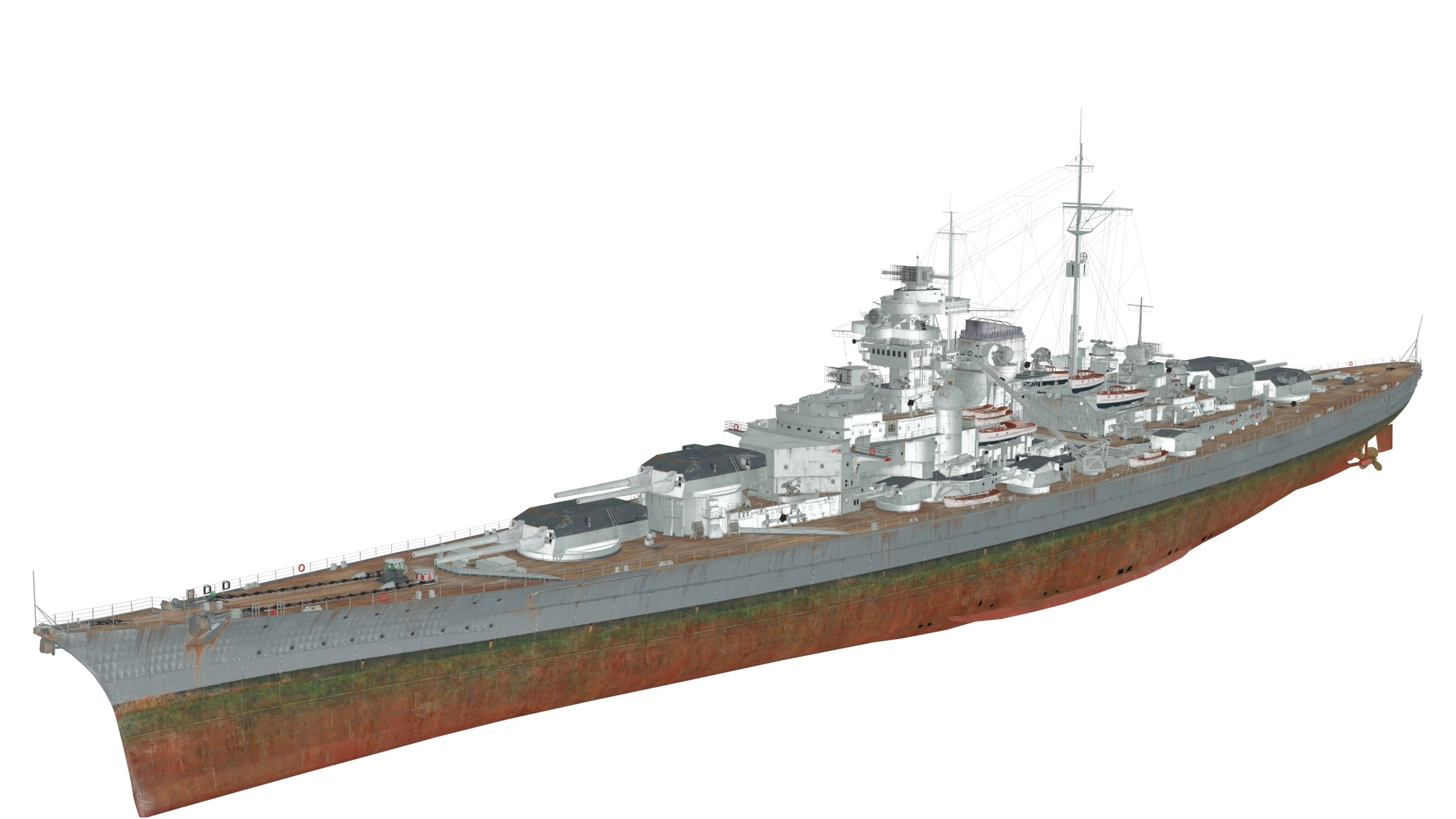
Battle ship Bismarck in detal
High detailed 3d model of the battle ship Bismarck, project 19393D model low poly for game ready and rendering.Textures: from 512×512 to 4096x409Diffuse, Specular, Normal.
-
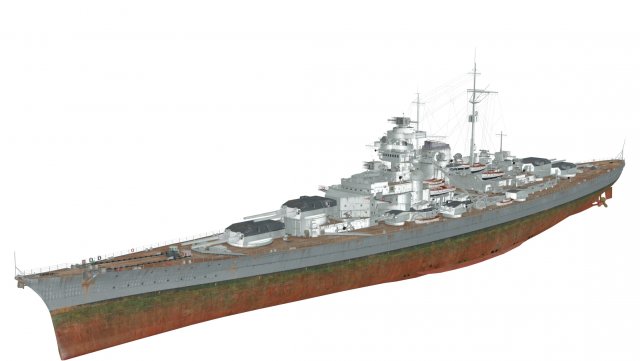
Battle ship Bismarck in detal 3D Model
High detailed 3d model of the battle ship Bismarck, project 1939
3D model low poly for game ready and rendering.
Textures: from 512×512 to 4096×409
Diffuse, Specular, Normal. -
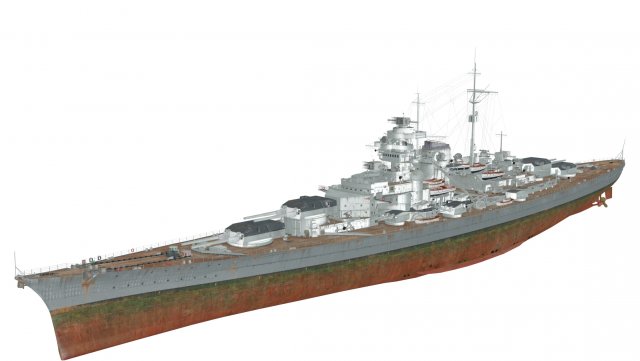
Bismarck Battleship in detal 3D Model
High detailed 3d model of the battle ship Bismarck, project 1939
3D model low poly for game ready and rendering.
Textures: from 512×512 to 4096×409
Diffuse, Specular, Normal.